
Rediscovering the Magic of Paper
A Guide to Stationery & Art Activities for Ages 1 to 3
I have always had a deep love for stationery. Growing up with limited internet access gave me a lasting nostalgia for all things paper—the texture of a crisp sheet, the smell of fresh notebooks, and the simple, quiet joy of coloring, printing, writing, and scrapbooking. There is something incredibly grounding about these tactile activities.
It is funny how modern life works. The paper-based activities that used to just be everyday life are now the beautiful, slow-living hobbies we return to for mindfulness, connection, and peace.
If you have a little one, you already know that a stray crayon and a blank piece of paper are sometimes the best entertainment in the world. As I build my own Amazon wishlist for when my baby reaches the right age, I’ve been hunting down some incredible, aesthetic stationery finds.
However, a quick note before we dive into the fun: Always check the manufacturer age limits on stationery products. Many traditional supplies carry choking hazards or toxicity warnings. While many products say they are strictly for ages three and up, there are plenty of ways to safely introduce the joy of paper, texture, and color much earlier with the right supervision and specialized products.
Here is my roadmap for a creative stationery journey, filled with simple, budget-friendly activities from the baby months all the way through age three.
Hi there! Some of the links below are affiliate links, which direct you to Amazon. Shopping through them is a simple, no-cost way to support our work and blog. Thank you for your support!
9 Months: The Mess-Free Sensory Masterpiece
You don’t have to wait until your baby can perfectly grip a pencil to start their first art project. At around nine months, you can introduce a beautiful, mess-free painting activity.
The Stationery: Thick, high-weight watercolor paper or cardstock, child-safe washable tempera paint, a large Ziploc bag, and painter's tape.
The Activity: Place a few drops of paint directly onto the paper. Carefully slide the paper inside the plastic Ziploc bag and seal it completely. Tape the bag down to a highchair tray or a light wood table using painter's tape so it doesn't slide around.
Why it works: Your baby can squish, smear, and blend the colors through the plastic, feeling the squishy texture without getting a single drop of paint on their hands or your furniture. Once they lose interest, carefully cut the bag open, slide the paper out, and let it dry. Just like that, you have a beautiful piece of abstract art ready for a minimalist frame!
12 to 18 Months: The Direct Touch & Sensory Fun
Once your baby hits the one-year mark, the real deal starts. This is the stage of direct exploration where they want to feel everything. Sensory art now moves beyond the plastic bag, but we can still keep it manageable and fun.
The Stationery: Splat Mats (anything for covering an entire coffee table or floor space, I suggest the disposable if you already have enough laundry to do) and egg-shaped crayons. Egg crayons are fantastic because they fit perfectly into a one-year-old’s palm before their pincer grasp is fully developed. And paper.
The Activity (Yogurt/Bath Painting): If you are nervous about real paint ending up in their mouth, mix plain Greek yogurt with a drop of organic food coloring. Let them sit in an empty bathtub or on a massive sheet of butcher paper outside, and let them use their fingers to "paint."
The Activity (Tape Resist Art): Lay down a few strips of painter's tape on a piece of cardstock in geometric patterns. Let your toddler scribble wildly over the whole page with their beeswax crayons. When they finish, gently peel away the tape to reveal clean, crisp white lines underneath their scribbles.
As perfect as these ideas sound on paper, here is a gentle reminder: your little one will toss the crayons, try to take a bite out of them, and attempt to color the walls, chairs, and tables! Remember, they are just learning how it all works. My biggest tip? Keep going! Redirect them gently when they try to eat the crayons, and just keep offering the activity. Consistency is key, and the mess is all part of the learning process.
Other great art supplies that work beautifully for this age are twistable crayons, simple coloring books, and large rolls of painting paper.
2 Years Old: Texture, Stamping, and Giant Canvases
At two years old, toddlers love cause-and-effect. They want to see that their action creates a direct mark on the paper. They are also starting to understand boundaries but still need plenty of room to move.
The Stationery: Heavy-duty kraft paper, washable stamp pads (large, child-safe ink blocks), and triangular crayons (which prevent them from rolling off the table and causing frustrations!).
The Activity (Nature Stamping): Take a slow walk outside to gather textured leaves, flat stones, or twigs. Bring them inside, gently press them onto a child-safe ink pad, and show your toddler how to stamp the natural textures onto kraft paper. It creates a gorgeous wrapping paper you can actually use for family gifts!
The Activity (The Giant Box Canvas): Don't throw away your large Amazon delivery boxes! Open a giant cardboard box up flat on the floor, or leave it fully assembled and let your two-year-old climb inside with a handful of chunky markers. It keeps the containment of a coloring book but gives them the freedom of a giant canvas.
3 Years Old: Fine Motor Skills & Independent Creating
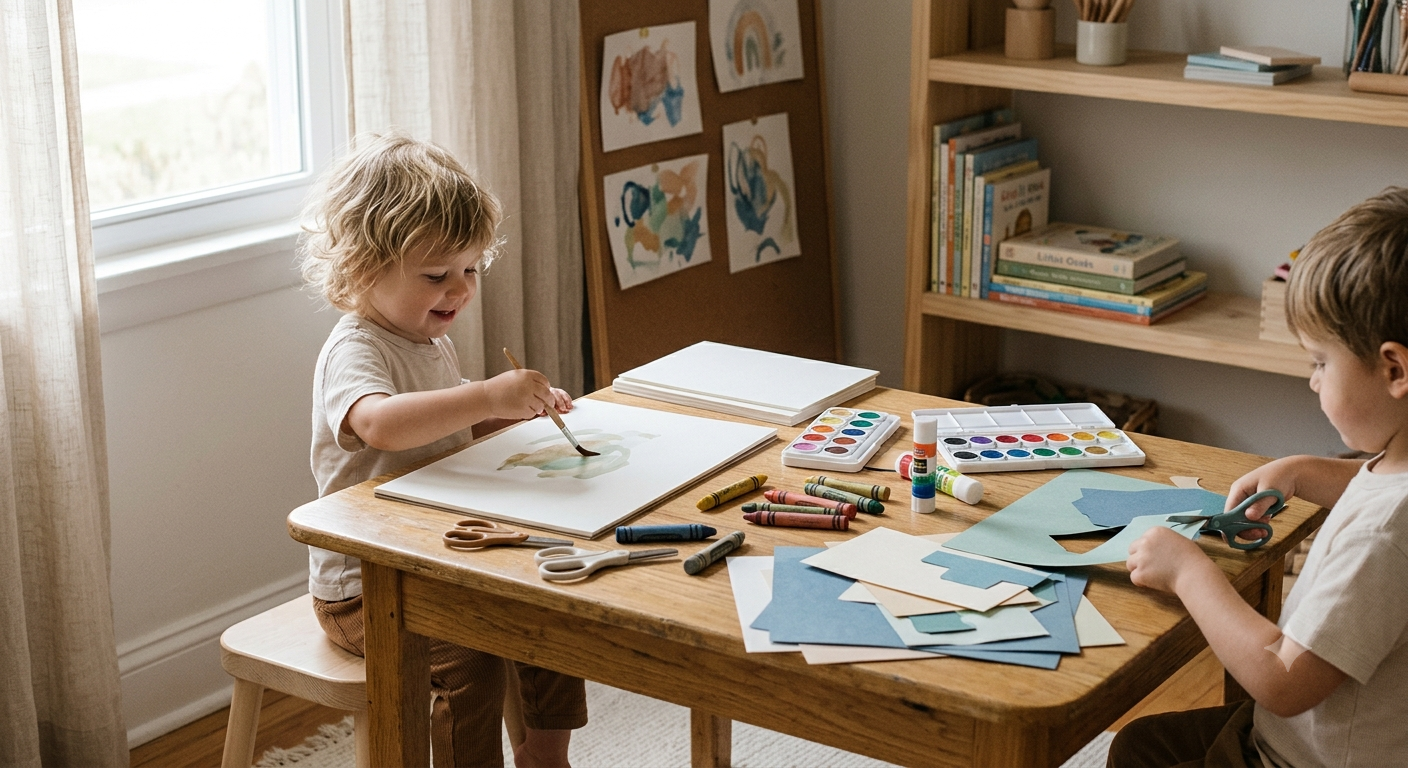
By age three, your little creator is ready for more independent stationery work. Their fine motor skills are sharpening, and they are beginning to love the process of cutting, pasting, and building shapes.
The Stationery: Preschool safety scissors, non-toxic glue sticks, construction paper, and watercolor palettes.
The Activity (The Scrapbook Collage): Instead of throwing away old magazines, catalogs, or beautiful leftover paper scraps, let your three-year-old practice their scissor skills by cutting out shapes or tearing paper into shreds. Show them how to use a glue stick to paste the pieces onto a large sheet of cardstock to make a textured mosaic.
The Activity (Watercolor Exploration): Watercolors are incredibly forgiving and beautiful. Teach them the magic of dipping the brush into water, waking up the paint, and watching the colors blend on watercolor paper.
Shop Our Favorite Aesthetic & Toddler-Safe Stationery
Ready to set up your own low-mess art corner? I’ve rounded up my favorite Amazon stationery finds for ages 0 to 3. Every item is handpicked to blend function, safety, mess free, and simple.
Mess Free Coloring Book Set for Toddlers
Color sets
